
Colonizing the Moon

A future where the Moon is colonized and there are space tourists would represent a significant milestone in human exploration and expansion. The prospect of a permanent human presence on the Moon could have profound implications for science, industry, and space exploration as a whole.
In this scenario, the Moon could serve as a testing ground for future missions to Mars and other planets in our solar system. Scientists and engineers could conduct experiments and develop technologies to support human life in harsh, extra terrestrial environments. The Moon's unique geology and resources, such as its water ice, could also be studied and exploited for scientific and commercial purposes.
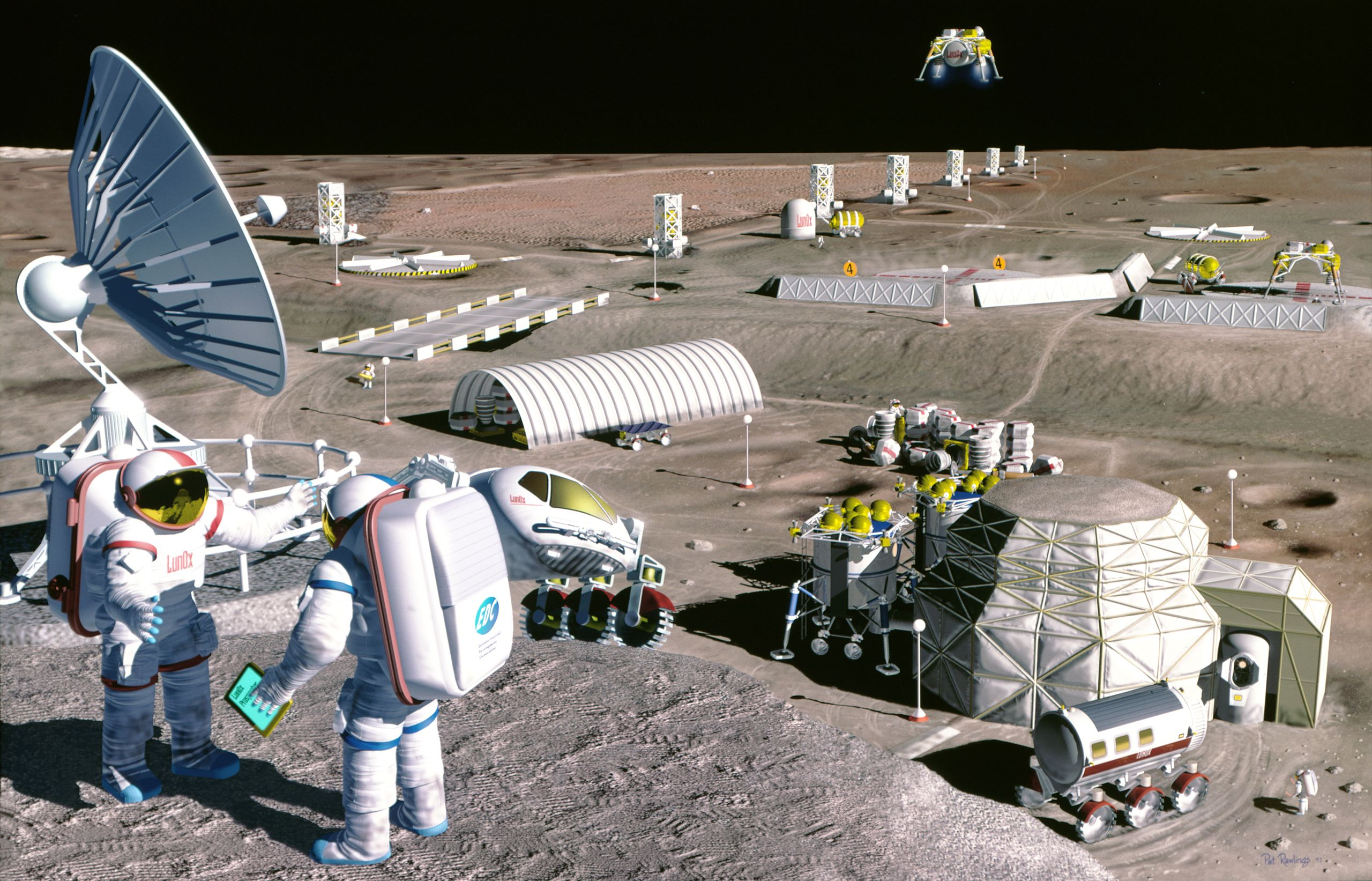
With the advent of space tourism, more people could have the opportunity to experience the thrill of space travel first hand. Companies could offer trips to the Moon, complete with lunar landings and excursions, allowing visitors to witness first hand the majesty of Earth from a different perspective.
However, the colonization of the Moon would also bring about new challenges and ethical considerations. For example, who would have jurisdiction over the Moon, and how would disputes be resolved? How would we manage and sustain the resources needed to support a permanent human presence on the Moon? What steps would we take to ensure that the Moon's delicate ecosystems and cultural heritage are protected?
Overall, a future where the Moon is colonized and there are space tourists would represent a major milestone in human exploration and expansion. However, it would also require careful planning and consideration to ensure that we do so in a sustainable and responsible way.